Testing

Material testing machines for quality control

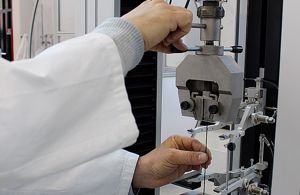
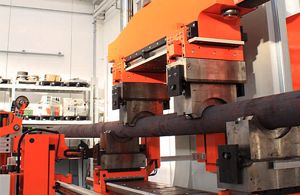
Also known as universal testing machines (UTMs), these devices enable tensile, compression, flexural and other mechanical tests to be carried out on metals, plastics, composites and numerous other materials.

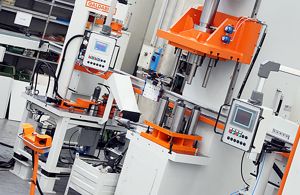
Galdabini testing machines are designed to offer precision, reliability and repeatability of results, supporting research laboratories, universities, quality control centres and production departments.

Thanks to the ability to integrate strain gauges, advanced measurement systems and analysis software, they enable tests to be carried out in accordance with major international standards such as ISO, ASTM and DIN.

Plastic, Rubber and Composites

Material testing machines are used to analyse fundamental properties such as tensile strength, elastic modulus, deformation and fracture behaviour. 

Mechanical testing enables the performance of engineering polymers, elastomers and composite materials used in numerous industrial applications to be assessed. Galdabini universal testing machines allow tests to be carried out in accordance with international standards such as ISO 527 and ASTM D638.

Read more

Metal and Alloy

Steels, light alloys and metallic materials must undergo rigorous mechanical testing to ensure performance and reliability. Universal testing machines enable the analysis of properties such as yield strength, tensile strength and deformation behaviour.

Through precise and repeatable testing, it is possible to verify the quality of materials used across numerous industrial sectors, from mechanical engineering and the automotive industry to the most complex structural applications.

Read more

Paper, Packaging and Textile

Materials used in packaging and textiles must ensure strength, flexibility and durability during use and transport. Material testing machines enable the mechanical behaviour of paper, plastic films, fabrics and flexible materials to be analysed through tensile, compression and elongation tests.

These tests are essential for developing higher-performance packaging and for improving the quality of the materials used in production processes.

Read more

Finished and Semi finished products

Material testing machines are widely used to analyse the mechanical performance of finished and semi-finished products before they are placed on the market. 

Through tensile, compression and structural strength tests, it is possible to verify the reliability of industrial components, mechanical parts and manufactured goods. Material testing allows real-world conditions of use to be simulated and is a fundamental tool for quality control and product certification.

Read more

Building

In the building and construction sector, it is necessary to analyse the mechanical properties of structural materials such as steels, alloys, composites and building materials. 

These tests enable the assessment of the strength, deformation and behaviour under load of components used in infrastructure and building structures. Thanks to their high precision, Galdabini testing machines support laboratories and research centres in certifying the performance of materials used in the construction sector.

Read more

Biomedical and Food

In the biomedical and food sectors, materials testing machines are used to analyse the mechanical properties of biomaterials, medical devices and materials intended for food packaging.

Tensile and compression tests enable the strength, elasticity and durability of materials to be assessed. These materials tests are essential for ensuring safety, quality and compliance with the standards required in the medical and food sectors.

Read more

FAQ

What tests can be carried out using a materials testing machine?
Material testing machines enable a range of mechanical tests to be carried out, including tensile, compression, flexural and shear tests. These tests allow key material properties to be determined, such as mechanical strength, elastic modulus, elongation and fracture behaviour. The tests can be performed on metals, plastics, composites, textiles and numerous other materials used in industrial processes.
Material testing is governed by international technical standards that specify test procedures, sample preparation and measurement parameters. Among the most widely used standards are ISO and ASTM, such as ISO 527 for tensile testing of plastics, ISO 178 for flexural testing and ASTM D638 for testing polymeric materials. The use of these standards ensures results that are comparable at an international level.
The calibration of materials testing machines is generally carried out at regular intervals, often annually, in accordance with the laboratory’s quality procedures or applicable regulations. Calibrating the machine allows for the accuracy of the force measurement system and any associated sensors to be verified, ensuring that materials tests are carried out with reliable results that comply with technical standards.
Are you interested in our machines and solutions? Contact Now