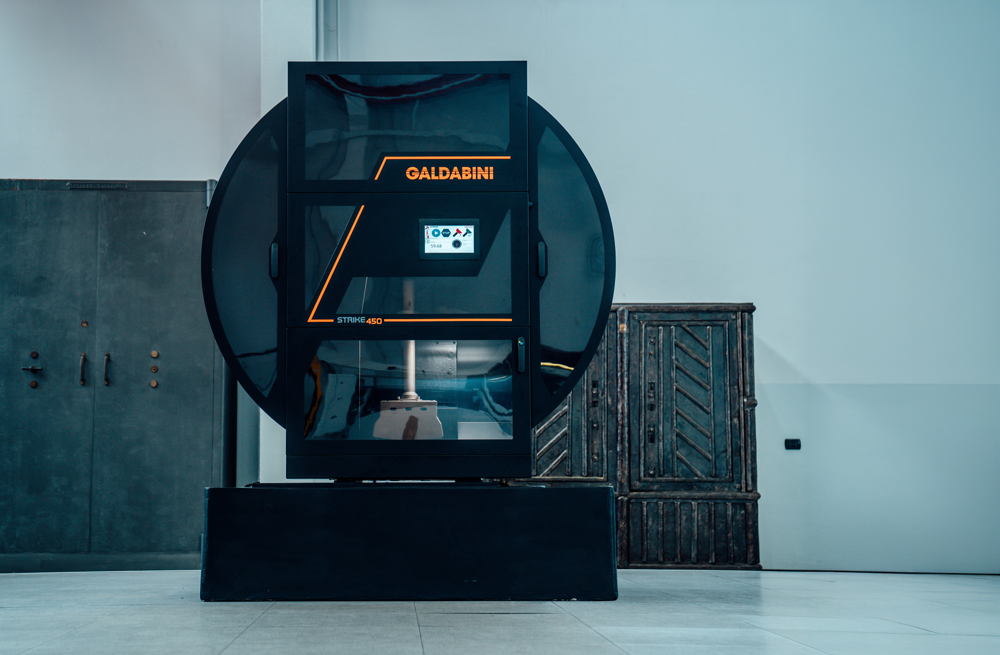
Technical details
Test machines: what they are, how they work and their applications in industry

6/8/2026
Test machines play a fundamental role in quality control, research and development and material characterization.
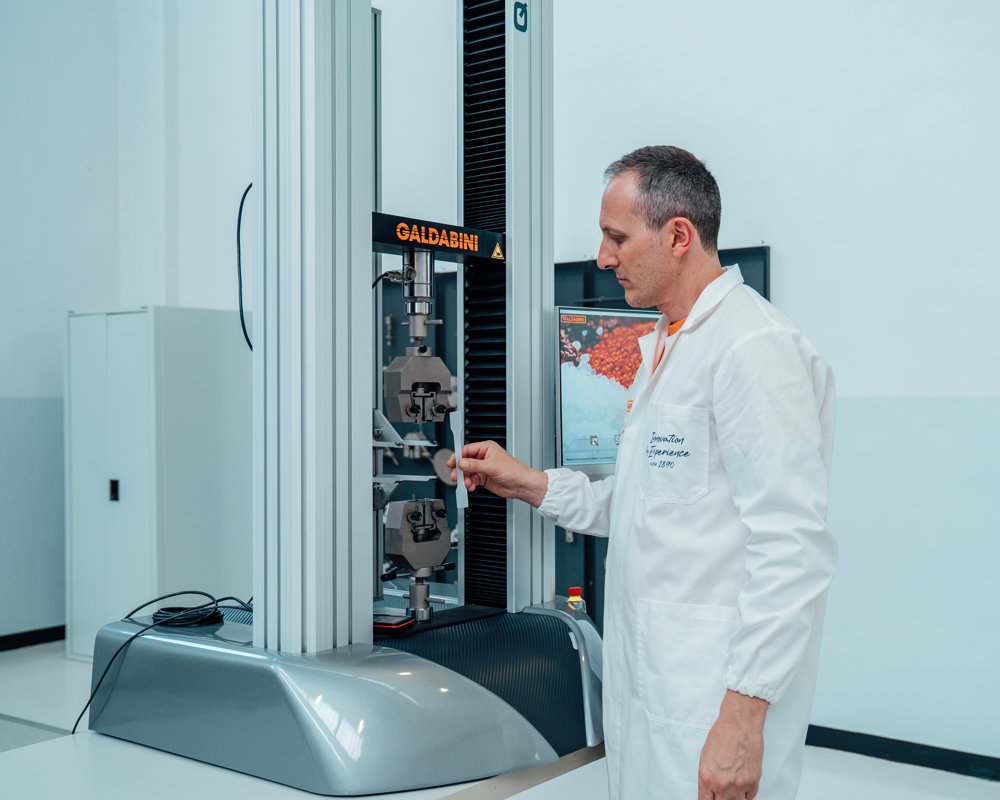
In an industrial environment increasingly focused on precision, regulatory compliance and the reliability of the final product, understanding the mechanical behavior of a material is no longer optional but a necessity. Whether dealing with metals, plastics, composites or other technical materials, mechanical tests allow the collection of objective and repeatable data useful for validating designs, verifying production processes and ensuring high quality standards. In this scenario, test machines are an essential tool for manufacturing companies, laboratories and research centers. Galdabini has been operating for years in the field of material testing machines, developing solutions engineered to offer precision, reliability and operational continuity.
What test machines are
Material testing machines are instruments designed to measure the mechanical behavior of a material or a component when subjected to specific stresses. Through controlled tests, these devices enable the collection of data essential to understand a material's characteristics, supporting product development activities, quality control and performance verification.
What test machines are used for
The primary purpose of a test machine is to determine how a material responds to a given force or loading condition. The results obtained allow evaluation of properties such as strength, elasticity, deformation and structural behavior. This information is indispensable to ensure that a component or product meets the technical requirements required by its final application.
Test machines are used both in design and development phases and during production, to verify that the material maintains the expected characteristics and that the production process complies with established quality standards.
Why material testing is essential
Every material has specific characteristics that can directly affect a product's performance. A variation in mechanical properties can compromise the quality, safety or durability of a component. Material testing makes it possible to identify potential critical issues before the product is placed on the market, reducing the risk of defects and improving the overall reliability of production.
Furthermore, in many industrial sectors, material testing is a mandatory requirement to comply with regulations, international standards and technical specifications requested by customers.
Main types of tests
Test machines can be used to perform various types of mechanical tests. Among the most common are tensile tests, used to evaluate a material's strength and elongation; compression tests, which measure behavior under compressive load; and flexural tests, employed to analyze response to bending stresses. In addition to these, there are other specific tests that allow deeper investigation of a material's behavior depending on the application and expected operating conditions.
How test machines work
Although they vary depending on the type of test and machine configuration, the operating principle remains the same: apply a controlled force to the specimen and precisely record its response.
During a test, the specimen is subjected to a progressive and controlled load. The machine continuously records the relevant parameters, allowing analysis of the material's behavior throughout the entire test cycle. The collected data form the basis for technical evaluations, material comparisons and conformity checks.
Data accuracy and reliability
The reliability of the results depends on the machine's ability to apply the load precisely and to acquire accurate data throughout the test. For this reason, precision, repeatability and system stability are essential characteristics for any test machine intended for industrial contexts, laboratories and research centers.
Reliable data enable more informed technical decisions, improve product quality and reduce the risk of errors in subsequent stages of the process.
The importance of software in test management
Today software is a central component of modern test machines. It is not limited to data acquisition but contributes to test configuration, procedure management, result processing and generation of the necessary documentation. Well-designed software simplifies the operator's work, reduces setup times and ensures greater efficiency in managing laboratory and quality control activities.
Galdabini test machines: design, software and support
One of the distinguishing elements of Galdabini test machines is the direct control of the entire development process. From design to manufacturing, including software and after-sales support, every phase is managed internally, enabling the company to offer integrated solutions and highly specialized support.
From design to production: a machine built in-house
Galdabini designs and manufactures its test machines in-house. This approach allows complete control over the production chain, ensuring high quality standards and deep knowledge of every machine component. In-house production also provides an important advantage in terms of reliability, design continuity and the ability to respond to customers' specific needs.
Each machine is born from a legacy of expertise developed over time and from a constant attention to build quality, aspects that contribute to making Galdabini solutions recognized internationally.
Software developed by Galdabini
In addition to the mechanical and electronic components, the software is also developed directly by Galdabini. This integration between hardware and software optimizes machine performance, improves the operator experience and ensures perfect compatibility among all system components.
In-house development also allows continuous evolution of available features, implementation of improvements and provision of an operating environment designed specifically for material testing needs.
Technical support for any need
Being the manufacturer of both the machine and the software is also a concrete advantage from a support perspective. Customers can rely on a single point of contact able to intervene on all aspects of the solution, from mechanical to software issues.
This approach enables reduced response times, simplifies the management of support requests and ensures more effective assistance. Deep knowledge of the entire system indeed allows addressing potential issues with a comprehensive understanding of the machine and its operation.
Quality and the value of Made in Italy
In-house design and production also represent a concrete expression of Made in Italy. Galdabini test machines combine engineering expertise, attention to detail, build quality and design care. These elements contribute not only to machine performance but also to its long-term reliability and ability to meet the demands of an increasingly competitive industrial market.
Applications of test machines
Test machines are used in numerous industrial and scientific sectors, where knowledge of material properties is a determining factor for the quality and reliability of the final product.
Metallurgical and metalworking sector
In the metals sector, mechanical tests allow verification of fundamental characteristics such as strength, deformability and behavior under load. The results obtained support development activities, material qualification and quality control during production.
Plastics and polymers
Tests on plastic materials make it possible to analyze the performance of polymers and technical materials used in numerous industrial applications. The availability of accurate data helps companies select the most suitable material and ensure consistent performance over time.
Composites and advanced materials
The evolution of composite materials has increased the importance of mechanical testing even in highly technological sectors. Test machines allow characterization of innovative materials and understanding of their behavior in various operating conditions.
Research, development and laboratories
Universities, research centers and laboratories use test machines daily for experimental activities, development of new materials and project validation. In these contexts, precision and reliability of results take on a particularly important role.
How to choose a test machine for your application
The choice of a test machine depends on several factors, including the type of material to be tested, the test to be performed, the level of precision required and the operational needs of the laboratory or company. In addition to technical performance, it is important to evaluate aspects such as software, ease of use, availability of support and the possibility of adapting the system to future application requirements.
Choosing a solution developed by a manufacturer who directly controls both the machine and the software can represent an important advantage in terms of reliability, technical support and continuity over time.
Test machines: the value of a solution designed to last
Test machines are an indispensable tool to understand the behavior of materials, improve product quality and support decision-making processes based on reliable data. In an industrial context increasingly oriented towards precision and traceability, the ability to obtain accurate and repeatable results becomes a strategic element for companies and laboratories.
Thanks to in-house design and production, proprietary software development and comprehensive technical support, Galdabini offers an integrated approach that accompanies the customer throughout the entire machine lifecycle. A value that goes beyond the mere supply of a testing system and translates into reliability, expertise and continuous support over time.